
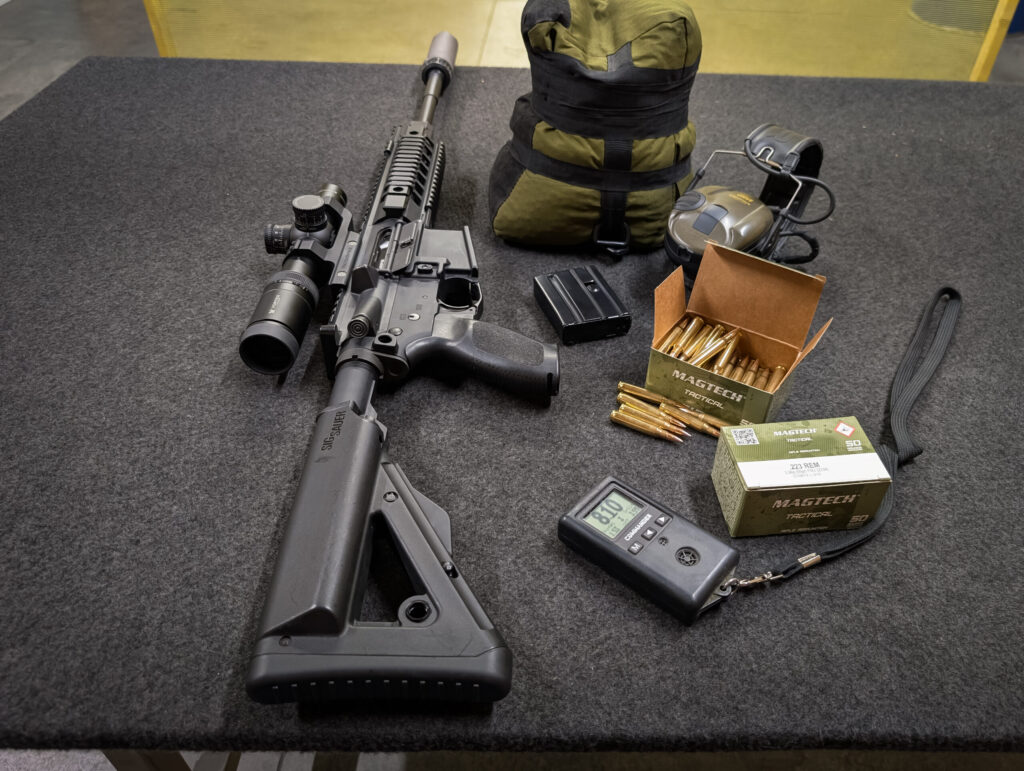
A shot timer is easy to associate with competition shooting. Beep, draw, shoot, check the time, repeat.
But competition is only one reason to use one.
For any shooter interested in making range sessions more productive, a timer can provide something that is otherwise surprisingly difficult to get: objective feedback.
Without some kind of measurement, it is easy to leave the range thinking a session went well because everything felt smooth. The problem is that memory and perception are not particularly reliable performance metrics.
A timer gives you numbers.
And numbers give you something to compare.
You Cannot Improve What You Are Not Measuring
Most experienced shooters already pay attention to accuracy. Groups are visible, hits are visible, and misses are obvious.
Time is different.
A string that feels fast may not actually be faster than the previous one. A sequence that feels smooth may contain hesitation you do not notice until it is measured.
A shot timer removes some of that guesswork.
The goal does not have to be chasing the fastest possible time. In fact, constantly trying to go faster can turn useful practice into sloppy practice.
The real value is establishing a repeatable benchmark.
Run the same exercise under the same conditions and record the result. Later, repeat it and compare.
Now you have information instead of an impression.
Consistency Matters More Than One Fast Run
One unusually fast run does not necessarily tell you much.
Consistency does.
If five repetitions are clustered closely together, that says more about your current performance than one great run surrounded by four poor ones.
A timer makes those patterns visible.
You may find that your first repetition is consistently slower. You may discover that performance begins falling off after several consecutive runs. You may notice that a small equipment change produces no measurable improvement despite feeling better.
That information can help separate actual progress from perceived progress.
Use the Timer as a Measurement Tool
There is a tendency to treat the timer itself as the objective.
It should not be.
Accuracy, consistency, and proper execution still matter.
The timer simply adds another piece of information.
A useful approach is to establish an acceptable standard first, then measure how consistently you can perform within that standard.
If accuracy starts deteriorating simply because the timer is running, the number is not particularly valuable.
The better question is not simply, “How fast was it?”
It is, “Can I produce the same acceptable result repeatedly, and is that result improving over time?”
That is a much more useful measurement.
Change One Variable at a Time
Timers can also help evaluate equipment and technique changes.
If you change several things at once, it becomes difficult to determine what actually affected the result.
Instead, establish a baseline.
Then change one variable and repeat the same test.
Maybe it is equipment placement. Maybe it is a different optic setup. Maybe it is simply a change in how you structure the repetition.
If the numbers improve consistently without sacrificing accuracy, the change may be helping.
If they do not, you have learned something equally useful.
This is one reason objective measurements tend to beat assumptions.
Reduce the Dead Time Between Repetitions
A productive range session also depends on keeping unnecessary interruptions under control.
Constantly stopping to organize ammunition, prepare magazines, or reset equipment breaks the rhythm of a structured session.
That does not mean everything needs to become a race.
It means preparation matters.
If you plan to run repeated timed strings, having ammunition and magazines organized beforehand keeps more of the session focused on the work you actually came to do.
This is also where tools such as the RAM-IT Fast Loader fit naturally into the process. Faster magazine preparation means less time spent repeatedly pressing rounds into magazines and more time available for the repetitions you are actually measuring.
The timer measures your range work.
Good preparation helps protect the time available to do it.
The Number Is Only Useful If You Use It
Owning a shot timer does not automatically make training more productive.
Recording and comparing the results does.
You do not need an elaborate spreadsheet or complicated performance system. A few consistent benchmarks recorded over several range sessions can reveal trends that would otherwise be easy to miss.
The important part is repeating the same measurement often enough for the numbers to mean something.
That turns the timer from another piece of equipment in the range bag into a practical feedback tool.
Competition shooter or not, that is useful information.