
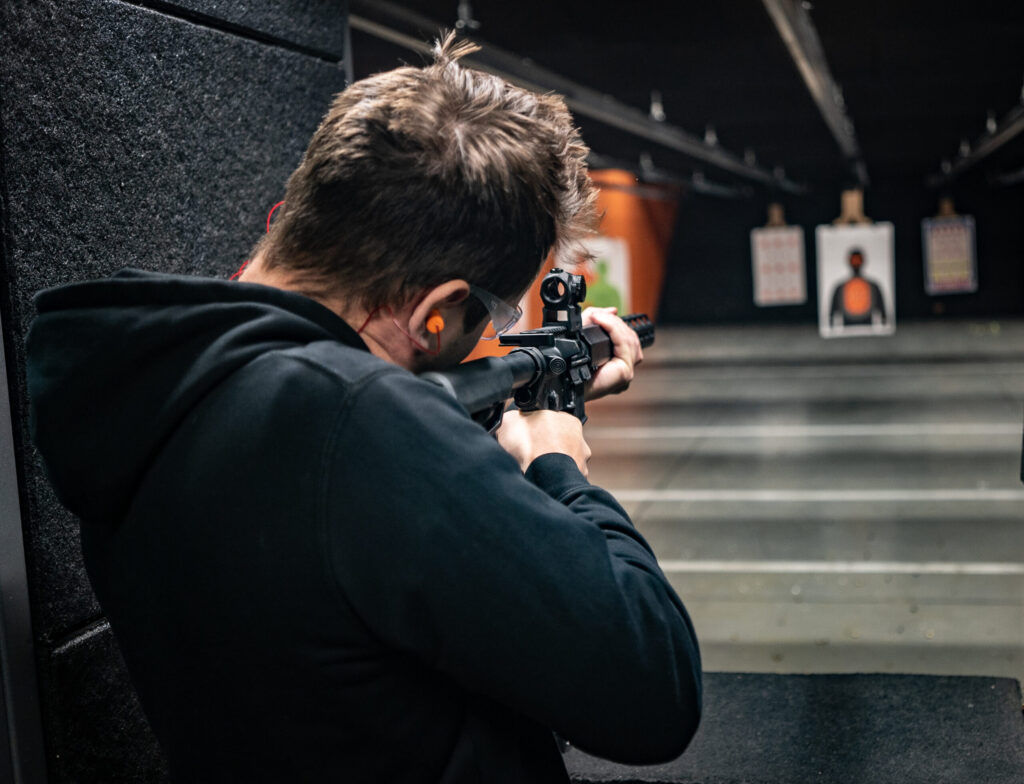
A productive range session is not defined by how much ammunition you used.
It is defined by how much useful work you completed.
Round count is easy to measure, which is why shooters often use it as a stand-in for productivity. But firing more rounds does not automatically mean you completed more meaningful repetitions, identified more problems, or improved a specific skill.
A better measure is training density.
Training density is the amount of deliberate, properly evaluated practice you fit into the time available. It focuses on the quality and structure of the session, not just the volume of ammunition fired.
More Shooting Is Not Always More Training
There is a difference between firing rounds and completing useful repetitions.
A useful repetition has a purpose. It gives you something to observe, measure, or correct. You know what you are working on before the drill starts, and you evaluate the result when it ends.
By contrast, an unstructured session can burn through ammunition quickly without producing much information. The shooter stays busy, but the session lacks a clear standard.
High training density does not mean rushing. It means reducing wasted motion and spending more of the session on work that supports the objective.
Start With One Primary Objective
Training density improves when the session has a defined purpose.
That objective might involve:
- Confirming a zero
- Working from a specific shooting position
- Improving transitions
- Measuring split times
- Testing equipment
- Practicing reloads
- Evaluating consistency at distance
Trying to cover too many unrelated skills in one session creates unnecessary resets and makes the results harder to evaluate.
Choose one primary objective, then build the session around it. Secondary work can be added when it supports that objective rather than competing with it.
Reduce Administrative Downtime
Every range session includes time that is not spent shooting. Some of it is necessary. Targets must be changed, equipment must be adjusted, and results must be reviewed.
The problem is avoidable downtime.
Common interruptions include:
- Searching through a range bag
- Loading magazines between every drill
- Reorganizing ammunition on the bench
- Changing the drill without a clear reason
- Moving targets repeatedly
- Troubleshooting equipment that was not checked beforehand
These interruptions may seem minor, but they break the rhythm of the session and reduce the number of focused repetitions you can complete.
A more efficient setup keeps frequently used equipment accessible, groups ammunition by purpose, and prepares enough magazines to support the planned drill sequence.
Organize the Session Before the First Round
A simple plan improves training density immediately.
Before starting, define:
- The skill or equipment being evaluated
- The drill or standard being used
- The number of repetitions
- The information you want to record
- The condition that signals it is time to stop or change drills
This prevents the session from turning into a series of improvised decisions.
It also makes preparation easier. You know how many targets, magazines, and rounds are needed before the first string begins.
Evaluate Between Strings
Training density is not just about squeezing in more repetitions.
The repetitions still need to be evaluated.
Take enough time between strings to review the target, check the timer, note a recurring error, or make one deliberate adjustment. Then repeat the drill under the same conditions.
Changing several variables at once makes it difficult to identify what produced the result.
A productive rhythm is simple:
Perform the drill. Review the result. Change one variable. Repeat.
That process creates useful information instead of random activity.
Watch for Declining Quality
Training density falls when fatigue begins to damage the quality of the repetitions.
At that point, continuing to fire may only reinforce poor execution.
Signs of declining quality can include:
- Slower decision-making
- Inconsistent positions
- Reduced attention to the drill standard
- Sloppy equipment handling
- Repeated mistakes without correction
- A noticeable decline in accuracy or control
The answer is not always to stop the session completely. It may be better to reduce the drill complexity, take a short break, or move to a lower-intensity task.
The goal is to protect the value of the repetitions.
Magazine Preparation Is Part of the System
Magazine loading is not training, but it affects how smoothly the training session runs.
When magazine preparation repeatedly interrupts a drill block, attention shifts away from the objective and toward administrative work.
Preparing magazines in advance helps. So does using a consistent loading system at the bench.
RAM-IT Fast Loaders are designed to make magazine preparation faster and reduce repetitive thumb pressure. They work with common AR magazine loading methods, including loose ammunition, ammunition boxes, and stripper clips. The result is less time spent preparing magazines and more time available for the work you came to complete.
Measure the Work That Matters
A high round count can make a session feel productive.
That does not mean it was.
A better question is: How many useful repetitions did you complete, and what did you learn from them?
Improving training density means entering the session with a purpose, reducing avoidable interruptions, evaluating results, and stopping before fatigue turns practice into noise.
The goal is not simply to shoot more.
The goal is to get more value from the time, ammunition, and equipment already committed to the session.